Summer readiness for commercial facilities: a practical HVAC maintenance plan that cuts callouts and protects uptime

Summer peak loads expose weak points in air distribution, controls, and power that stay hidden in shoulder seasons. Facilities and property managers know the pattern: rising complaints, drifting setpoints, short-cycling units, and after-hours callouts that erode budgets and trust. A disciplined, seasonally sequenced maintenance plan stabilizes comfort, protects uptime, and turns scattered service tickets into planned work.
Service Solutions Unlimited Group (SSU) coordinates HVAC, electrical, and controls in one mobilization with documented readings that support capital planning. The result is fewer disruptions, better indoor air quality, and defensible decisions about repair versus replace.
What HVAC maintenance is and why it matters
HVAC maintenance is the coordinated inspection, cleaning, testing, and adjustment of heating, ventilation, and air conditioning equipment to keep performance within design intent. In commercial facilities this includes air handlers, rooftop units, chillers, boilers, pumps, VFDs, terminal units, exhaust, and the Building Automation System (BAS). Done correctly, maintenance improves occupant comfort, reduces energy waste, extends asset life, and cuts emergency callouts by catching issues before they become failures.
A seasonally sequenced plan for summer readiness
For summer reliability, SSU uses a rolling 12-month calendar with spring tasks that set your plant and airside systems up for peak cooling:
- Filters and IAQ: Replace or wash filters on a documented schedule based on differential pressure and environment. Verify MERV ratings match design and confirm proper fit to prevent bypass.
- Coil cleaning: Clean condenser and evaporator coils with appropriate chemicals and rinse to restore heat transfer. Inspect fins and straighten where feasible.
- Delta-T checks: Measure supply-return temperature differential across coils and zones, compare to benchmarks, and investigate deviations that indicate fouling, airflow issues, or refrigerant charge concerns.
- Belts and bearings: Inspect and tension belts, check sheaves and alignment, lubricate bearings per manufacturer specifications, and document amperage draw before and after.
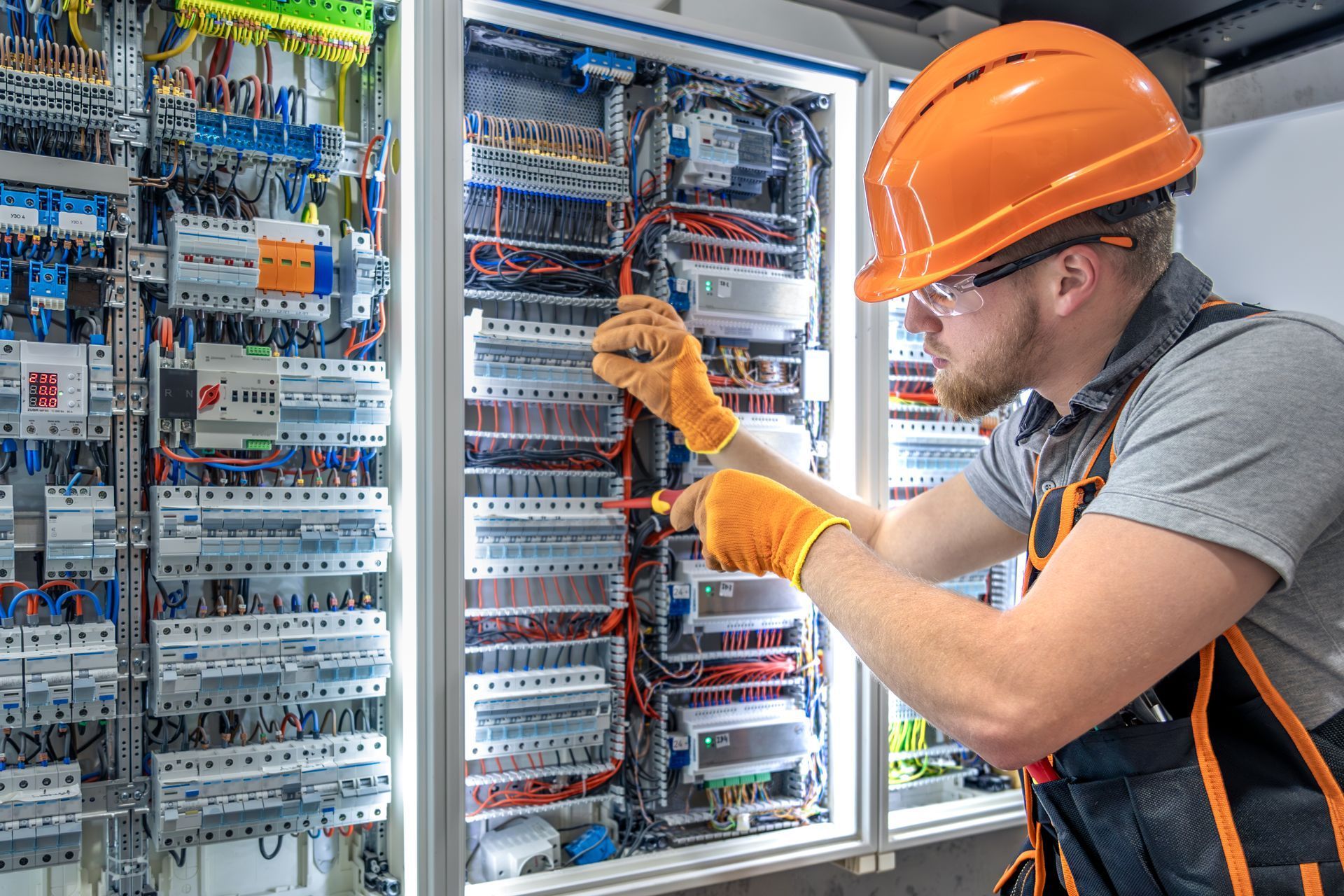
- Electrical terminations: Perform torque audits on panels, contactors, and disconnects; look for discoloration, pitting, and insulation damage. Where permitted, use infrared thermography to identify hot spots and load imbalances. Adhere to NEC and NFPA 70E requirements with LOTO and appropriate PPE.
- Condensate management: Clear traps and pans, verify drain pitch, test float switches, and treat lines to prevent biofilm that triggers water alarms.
- BAS alarm review: Review trend logs, clear nuisance alarms, validate setpoints and schedules, confirm economizer logic, and test critical alarms to ensure notifications reach the right responders.
- Air balance spot checks: Verify key zones for airflow and temperature stability; adjust as needed and flag distribution issues for corrective work.
This sequenced approach reduces duplicate access to rooftops, mechanical rooms, and tenant spaces, and creates a baseline of readings you can compare mid-season.
Blending preventive, predictive, and condition-based tactics
SSU balances four maintenance modes to match asset criticality and cost of failure:
Preventive maintenance: Time or usage-based tasks such as filter changes, belt replacements, lubrication, drain treatments, and scheduled electrical checks.- Predictive maintenance: Data-informed work that uses vibration readings, thermography, runtime hours, and BAS trends to act before degradation becomes a failure.
- Condition-based maintenance: Field measurements that trigger work when thresholds are exceeded, like abnormal delta-T, elevated bearing temperature, or high static pressure.
- Corrective maintenance: Planned repairs that resolve issues found during inspections and are scheduled to control risk and cost.
High-value or production-critical equipment often benefits from predictive and condition-based layers, while broad coverage is maintained with preventive routines.
Integrated mobilizations that minimize disruption
A single accountable partner reduces handoffs and interruptions. SSU stacks tasks in one visit where safe and practical: rooftop unit inspections paired with roof and flashing checks, condensate and drain verifications coordinated with interior ceiling access, and electrical infrared scans timed with HVAC load tests. One JHA, one lift plan, and one mobilization mean fewer tenant impacts and a tighter feedback loop between HVAC findings, electrical anomalies, and BAS adjustments. When needed, evening or weekend schedule blocks are used to validate controls sequences without affecting occupants.
For more detail on coordinated electrical scopes and safety protocols aligned to NEC and NFPA 70E, see our commercial and industrial electrician capabilities. SSU provides full electrical services and can assign a qualified commercial electrician when inspections point to distribution or control power issues.
Documented readings that feed capital planning
Every visit should produce measurable data. SSU captures filter differential pressures, delta-T by equipment and zone, motor amperage versus nameplate, static pressure, refrigerant subcooling and superheat where applicable, BAS trend snapshots, and infrared images with annotated load. These records show performance drift, support repair-versus-replace analysis, and inform budget timing. When failure risk is rising, the data makes the case for a targeted replacement instead of a fleet-wide guess.
If your facility needs integrated planning beyond HVAC, explore how our facility maintenance program standardizes SOPs, calendars, and KPIs across sites so you can compare outcomes and allocate resources with confidence.
How often service should occur
Frequency depends on load, environment, and criticality, but commercial cooling equipment typically benefits from quarterly inspections with season-specific scopes. Filters may require monthly or bimonthly changes in dusty environments. Critical sites often add mid-season checks to validate performance under peak conditions. BAS alarm reviews should be ongoing with monthly triage and seasonal setpoint audits.
If persistent comfort complaints or hard alarms continue after seasonal service, schedule diagnostics rather than waiting for failure. Our HVAC services team can assess, tune, or perform targeted HVAC repair with minimal downtime, and coordinate with controls to correct root causes, not symptoms.
Safety, compliance, and accountability
Work is performed under documented safety programs with LOTO, arc flash boundaries, and energized work permits where applicable. Torque values, IR images, and control adjustments are logged and tied to the asset registry so findings roll up into portfolio reporting. One manager remains accountable for HVAC, electrical, and controls outcomes, so there is no ambiguity about responsibility when issues span trades.
Quick FAQ
- What is HVAC maintenance? It is the scheduled inspection, cleaning, testing, and adjustment of heating, ventilation, and air conditioning systems to keep performance within design and reduce failures.
- What maintenance does HVAC need? Filter changes, coil cleaning, delta-T checks, belt and bearing service, electrical termination inspections, condensate management, controls calibration, and BAS alarm reviews.
- How often should HVAC be serviced? Quarterly is common in commercial settings, with filter service monthly to bimonthly as needed and added mid-season checks for critical sites.
- Does HVAC need regular maintenance? Yes. Routine service typically stabilizes comfort, reduces energy waste, and lowers emergency callouts.
- What does an HVAC tune-up include? Seasonal checks of coils, filters, belts, electrical connections, refrigerant metrics where applicable, airflow and static pressure readings, control verification, and documented performance baselines.
- What are the four types of maintenance? Preventive, predictive, condition-based, and corrective. A balanced program uses all four based on asset criticality.
- How can we improve facility maintenance? Standardize SOPs, use a rolling 12-month calendar, integrate HVAC, electrical, and BAS reviews in one mobilization, capture trend data, and act on findings through planned corrective work tied to capital planning.
Next steps
SSU can set up a rolling 12-month maintenance calendar, align HVAC, electrical, and BAS scopes, and document readings that feed capital plans and reduce callouts. Schedule a maintenance assessment to prepare your facilities for peak cooling and protect uptime across your portfolio.
Explore related services that support this integrated approach:
- Learn more about our HVAC services, including maintenance, diagnostics, and coordinated repairs, at our HVAC services page.
- See how our facility maintenance program consolidates calendars, SOPs, and reporting for multi-site portfolios at our facility maintenance page.
- When controls tuning is needed, review our Building Automation Systems capabilities to align alarms, trends, and sequences at our BAS page.
Contact:
info@ssunlimitedgroup.com
Internal links used:
- HVAC services: https://www.ssunlimitedgroup.com/hvac-services
- Facility maintenance: https://www.ssunlimitedgroup.com/facility-property-maintenance
- Building Automation Systems: https://www.ssunlimitedgroup.com/building-automation-systems