Industrial and commercial electrical services: what you need, what it costs, and how to avoid downtime
March 13, 2026

Industrial operations managers and commercial property leaders make decisions that influence safety, uptime, and financial performance every day. Nowhere is that more visible than in electrical systems, where a misstep can trigger unplanned outages, equipment damage, and compliance exposure. Selecting the right partner and defining the right scope protects people and production while containing lifecycle costs.


Service Solutions Unlimited (SSU) delivers integrated electrical capabilities aligned to risk reduction. This guide explains the differences between industrial and commercial electrical work, outlines typical scopes and studies, clarifies why certified teams and codified safety programs matter, and shows how coordinated multi-trade planning shortens shutdowns and accelerates commissioning.


Industrial vs. commercial electrical work

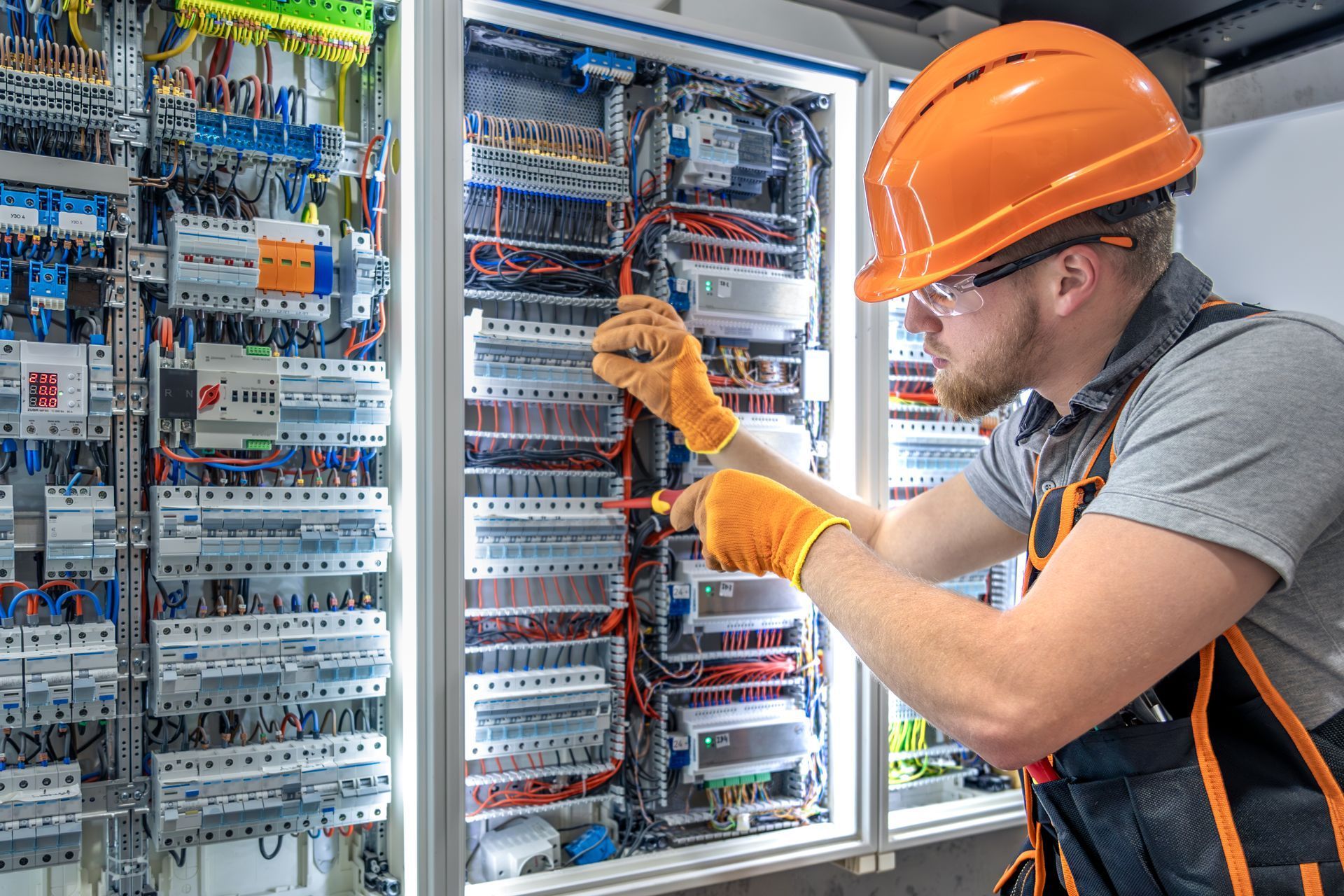
Industrial electrical work supports manufacturing lines, process equipment, material handling, and supervisory controls in environments that often involve higher fault currents, complex coordination, and continuous operations. Typical systems include medium-voltage distribution, motor control centers (MCCs), variable frequency drives (VFDs), programmable logic controllers (PLCs), instrumentation loops, and interlocks tied to process safety.


Commercial electrical work focuses on building distribution and occupant systems for offices, retail, hospitality, and mixed-use properties. The emphasis is on reliable low-voltage distribution, lighting and controls, emergency and standby power for life safety, and efficient tenant improvements with minimal disruption to operations.


The distinction is not just about voltage. It is about duty cycle, fault energy, protective device coordination, and controls integration. Industrial facilities require specialized commissioning and lockout protocols to protect operators and equipment, while commercial projects prioritize life safety, accessibility, and rapid tenant turnover. In both cases, adherence to the National Electrical Code (NEC), alignment with NFPA 70E electrical safety in the workplace, and local authority requirements define safe design and execution.


Typical scopes that protect uptime

A thorough electrical program addresses reliability across the asset lifecycle. Core scopes often include:

  • Power distribution upgrades and studies: load calculations, short-circuit and coordination studies, breaker settings, and selective tripping strategies.
  • MCCs and VFDs: specification, installation, programming, and harmonics mitigation to stabilize motors and improve energy performance.
  • Lighting and controls: high-efficacy fixtures, occupancy and daylighting controls, and photometric validation to balance safety, comfort, and efficiency.
  • Backup and emergency power: generators, automatic transfer switches, UPS systems, and testing regimes aligned to life safety and process continuity.
  • Arc flash studies and labeling: incident energy analysis, boundaries, PPE categories, and field labeling to meet NFPA 70E and inform safe work practices.
  • Predictive and preventive maintenance: infrared thermography, torque checks, insulation resistance testing, breaker exercise and cleaning, and scheduled shutdown coordination.
  • Grounding and bonding improvements: mitigating touch voltage, static discharge, and nuisance trips that erode reliability.


These scopes work best when paired with clear change control, instrument calibration records, and commissioning documentation that translate design intent into field performance.


Why certified teams and safety programs save money and lives

Electrical risk is asymmetrical. A single error can injure personnel, stop production, and damage assets. Certified electricians and supervisors trained in lockout tagout (LOTO), energized work permits, and job hazard analysis reduce that risk measurably. NFPA 70E compliance, including arc flash studies, shock and arc boundaries, and PPE categories, creates a framework that standardizes decision-making and field behavior.


Beyond compliance, disciplined procedures lower total cost of ownership. Correct breaker coordination reduces nuisance trips that lead to scrap and overtime. Accurate VFD setup protects motors and bearings. Documented LOTO speeds future service. When combined with infrared scans, torque audits, and cleaning, facilities often see fewer failures and longer intervals between major interventions. While pricing varies by scope and facility complexity, the cost of a structured safety and maintenance program is typically far lower than the combined expense of an unplanned outage, expedited parts, and lost production.


If you need a partner versed in both compliance and uptime strategy, SSU’s dedicated
electrical services team aligns procedures, testing, and documentation with your operating context.


Integrated electrical with HVAC and mechanical for faster turnarounds

Many shutdowns fail to meet schedules because electrical, HVAC, and mechanical workstreams are planned in isolation. SSU coordinates these trades under one management structure so that disconnects, crane picks, controls integration, and test sequences proceed in the right order with one point of accountability. This integration is especially valuable when tying electrical distribution to air handlers, chillers, VFDs, and Building Automation Systems (BAS), where control setpoints, safeties, and power quality interact.


Coordinated commissioning compresses timelines. Electrical verification feeds directly into functional testing of HVAC and process equipment, reducing rework and repeat access needs. For multi-trade upgrades, explore how our
building automation systems expertise connects the dots between power, controls, and performance. When projects expand in scope, SSU’s unified planning through construction project management helps maintain schedule integrity and communication.


Procurement tips to reduce risk and downtime

A robust RFP and service-level framework signals expectations and protects your operations. Consider including:

  • Experience and certifications: ask for evidence of NFPA 70E training, LOTO procedures, arc flash studies, and recent projects that mirror your voltage class and environment.
  • Engineering and studies: require short-circuit, coordination, and arc flash analysis with stamped reports and device setting files.
  • Commissioning and documentation: request pre-functional checklists, functional testing scripts, redlines, O&M manuals, and as-built drawings in your preferred format.
  • Maintenance cadence: define infrared scans, breaker maintenance intervals, torque checks, and VFD health checks, with outage planning and contingency procedures.
  • Response commitments: clarify communication protocols, escalation paths, and parts strategies for critical spares.


Tie payment milestones to documented quality gates. Establish a change control process for field conditions. Where the scope crosses multiple trades, designate a single accountable manager with authority over schedule, safety, and commissioning.


What it costs, realistically

Electrical pricing depends on voltage class, facility access, outage windows, existing conditions, and required studies. Material markets and lead times also influence budgets. Typical drivers include conductor and gear quantities, VFD horsepower and features, generator sizing and fuel systems, and the extent of testing and labeling. A site assessment is the most reliable path to a defensible estimate. SSU can scope, prioritize, and phase work to fit operational constraints while maintaining compliance.


Quick FAQ

  • What do industrial electricians do?
    Industrial electricians install, maintain, and troubleshoot power distribution, MCCs, VFDs, PLCs, and instrumentation in production environments, coordinate with safety systems, and perform testing and studies to keep lines running safely and efficiently.
  • What is the highest salary for an industrial electrician?
    Compensation varies by region, certifications, union status, shift, and industry segment. The highest earners are typically in heavy industrial, petrochemical, mining, or specialized manufacturing roles that require advanced skills and off-shift availability.
  • What type of electrician makes the most money?
    Specialists working in high-risk or highly technical environments often command the highest pay. Examples include industrial and controls technicians, instrumentation and controls (I&C) electricians, and those qualified for medium-voltage terminations or hazardous locations.
  • Do commercial electricians make more?
    Commercial electricians can earn strong wages, particularly in dense urban markets and complex projects, but industrial roles often exceed them due to specialized skills, continuous operations, and higher hazard exposure. Local market conditions can invert this relationship.
  • What is meant by electrical services?
    Electrical services encompass design, installation, upgrades, testing, troubleshooting, and maintenance of power and control systems. This includes panels and gear, feeders, lighting, backup power, studies and labeling, and ongoing preventive maintenance.


The SSU difference and next step

Electrical reliability is not an accident. It is the result of precise design, trained craftspeople, codified safety, and coordinated commissioning across every trade that touches your facility. SSU provides single-source accountability, integrating electrical with HVAC, mechanical, and controls to minimize downtime and deliver consistent outcomes. To benchmark your current state and prioritize the highest-value actions, schedule an electrical reliability assessment with our commercial and industrial electricians. We will align scope, safety, and schedule to support your production goals and protect your people.

February 9, 2026
Facilities run on many moving parts, and when the goal is comfort, code compliance, and controllable energy spend, coordination is everything. Building Automation Systems bring that coordination into one reliable framework, unifying HVAC, lighting, and other building systems so they respond to schedules, occupancy, and performance targets without constant manual intervention. This guide explains what a Building Automation System is, how it works, where it fits relative to SCADA, what typical costs look like by scope, and how a phased rollout can reduce downtime. The intent is practical clarity, not hype, so you can evaluate readiness, set expectations, and plan an upgrade that aligns with your budget and operational realities. What a building automation system is and how it works A Building Automation System (BAS), sometimes called a Building Management System (BMS), is the centralized platform that monitors and controls building systems. It connects field devices such as temperature, humidity, and CO2 sensors; actuators and variable frequency drives; and equipment controllers for air handlers, boilers, chillers, rooftop units, terminal units, exhaust fans, and lighting panels. The system ingests data, applies rules and schedules, and then issues commands to maintain comfort setpoints, optimize energy use, and alert staff to anomalies. Modern BAS platforms typically include: Networked controllers at the equipment level using open protocols such as BACnet or Modbus A supervisory server or head-end that aggregates data, runs analytics, and hosts the database A user interface or dashboard for trend viewing, alarms, and scheduling that is accessible from a workstation or secure browser Integration bridges for lighting control, metering, demand response, and in some cases access control or fire panel status monitoring When designed and commissioned well, the BAS becomes the single source of truth for performance, providing real-time visibility and historical trends that inform maintenance decisions and capital planning. Common use cases you can expect on day one Most facilities start with a core set of sequences that deliver fast, measurable value: HVAC scheduling that aligns occupancy with temperature setpoints and ventilation rates, including morning warm-up or cool-down and night setback Lighting control tied to time schedules, daylight sensors, or occupancy sensors to reduce after-hours waste Indoor air quality (IAQ) monitoring with CO2-based ventilation reset and filter status tracking to support comfort and code compliance Fault detection and diagnostics that surface issues such as sensor drift, valve leakage, simultaneous heating and cooling, or excessive equipment cycling before they become comfort complaints Additional layers can include utility metering, demand limiting during peak periods, and automatic notifications routing to operations teams or integrated service partners for timely response. SCADA vs. BMS, and where each is used Supervisory Control and Data Acquisition (SCADA) systems and BMS platforms share similar building blocks, yet they are optimized for different contexts. A BMS is purpose-built for buildings, focusing on HVAC, lighting, and energy management with standard building protocols and sequences. SCADA is prevalent in industrial environments, utilities, and process plants where continuous process control, custom logic, and higher-speed data acquisition are required. In mixed-use or industrial campuses, both may coexist. A BMS may manage offices, labs, and common spaces, while SCADA oversees process lines, water treatment, or critical manufacturing assets. Integration at the data layer can provide a campus-wide view, but ownership, cybersecurity policies, and change control should remain aligned with each system’s risk profile and operational needs. Cost ranges and what drives pricing BAS pricing varies widely by facility size, device count, protocol choices, software licensing, and whether the project is a retrofit or a new build. The figures below are directional, intended to frame budgets rather than serve as quotes, and can vary based on local labor conditions and final scope. Small commercial spaces (5,000 to 25,000 square feet) often see starter systems in the range of tens of thousands of dollars, covering a handful of air handling units or rooftop units, terminal devices, a head-end, and basic dashboards. Mid-size buildings (25,000 to 150,000 square feet) typically land in the mid-five to low-six figures, depending on the number of controlled points, integration to lighting and metering, and analytics features. Large commercial or institutional facilities (150,000 square feet and up) and multi-building campuses can range into higher six figures and beyond due to point density, redundancy, enterprise features, and cybersecurity requirements. Factors that influence cost and schedule include: Retrofit vs. new construction, since retrofits may require gateway devices, controller swaps, or rewiring to replace proprietary protocols with open standards such as BACnet Functional scope, including lighting integration, metering, analytics, and advanced fault detection that add software and commissioning hours IT and cybersecurity, such as network segmentation, certificate management, user directory integration, and secure remote access Compliance and documentation, for example sequence of operations, commissioning reports, and owner training that support long-term reliability Because each site is unique, Service Solutions Unlimited recommends a readiness audit to inventory systems, define goals, and produce a phased plan with prioritized paybacks. Installation complexity and how to minimize downtime Is a BAS system hard to install? The technical work requires certified controls professionals, yet the operational impact can be managed. The path is methodical: survey existing equipment and controls, confirm network design and protocol strategy, stage hardware, and preconfigure controllers and graphics. Phased rollout then reduces disruption by targeting zones or equipment groups during planned windows, coordinating with occupants, and keeping legacy controls in place until cutover. Service Solutions Unlimited uses Single-Source Utility (SSU) project management to orchestrate trades, schedules, and commissioning. With HVAC technicians, electricians, and controls specialists under one umbrella, the team can align panel power, sensor placement, and air balance in lockstep. For facilities that cannot afford downtime, night and weekend work, temporary controls, and parallel monitoring can further limit risk and preserve comfort during transition. If your site also needs supporting work, integrated teams streamline coordination. For example, electrical scope is handled by a licensed electrician , while HVAC upgrades or HVAC services proceed in sequence with controls installation. When projects expand, our coordinated construction project management ensures consistent quality and documentation from kickoff through closeout. Measurable outcomes facility leaders track Well-implemented automation pays back in ways that are visible on monthly utility statements and in the daily experience of occupants and staff. Typical outcomes include energy reductions from optimized schedules and setpoint resets, fewer service calls due to proactive alarms and fault detection, stabilized temperatures and improved IAQ that reduce hot-cold calls, and clearer maintenance planning informed by trend data. Over time, data-driven tuning often delivers additional savings as sequences are refined and equipment issues are corrected before efficiency degrades. To maintain momentum, pair the BAS with preventive maintenance and periodic recommissioning. Seasonal reviews of schedules, setpoints, and sensor calibration can protect gains, while operator training keeps the system from drifting into manual overrides that erode value. When to upgrade or start fresh Consider a BAS upgrade when any of the following are true: comfort complaints are frequent, energy use is rising without an obvious cause, parts of the building are on manual control, your system is locked behind proprietary protocols that limit vendor flexibility, or your current platform is out of support and cannot meet cybersecurity expectations. New construction is the ideal time to deploy open-protocol controls and standardized sequences, yet retrofits can often capture most of the same benefits with careful planning. A readiness audit will clarify the baseline, identify fast-payback measures such as scheduling and ventilation resets, and outline a phased roadmap that aligns to capital cycles and operational constraints. Quick FAQ What are building automation systems? A BAS or BMS is the centralized control and monitoring platform for HVAC, lighting, and related building systems, using sensors, controllers, and software to maintain comfort and optimize energy. What are examples of automation systems? Typical examples include HVAC scheduling, lighting control, indoor air quality monitoring with CO2-based ventilation reset, and fault detection and diagnostics that alert teams to issues early. What is SCADA vs BMS? BMS focuses on building systems such as HVAC and lighting, while SCADA is engineered for industrial processes and utilities that require high-speed data acquisition and custom process control. How much does a building automation system cost? Costs vary by size and scope, from tens of thousands of dollars for small sites to six figures and beyond for large or multi-building facilities; a site-specific assessment is the only reliable way to budget accurately. Is a BAS system hard to install? Installation is specialized, but disruption can be minimized through phased rollouts, off-hours work, and coordinated SSU project management that keeps comfort and operations stable during cutover. Next step If centralized control, measurable energy savings, and fewer comfort complaints align with your goals, schedule a BAS readiness audit with Service Solutions Unlimited. Our integrated approach unites controls, HVAC, and electrical expertise to deliver reliable results with unmatched convenience, from initial assessment through commissioning and ongoing support. For related scopes that touch the project, from licensed electrical services to coordinated construction management , our single-source model reduces stress and keeps your facility on a dependable path forward.
January 8, 2026
Keeping a commercial facility running is not just about fixing what breaks, it is about protecting people, minimizing downtime, and extending the life of every asset you manage. When you coordinate plumbing, electrical, HVAC, and building systems under one plan with one accountable partner, you reduce surprises, control costs, and give your teams the uptime they need. This guide defines commercial facility maintenance in practical terms, outlines how different maintenance strategies work, and shows how a single-vendor model streamlines multi-trade work, reporting, and results. What commercial facility maintenance includes Commercial facility maintenance is the coordinated care of a building’s systems, spaces, and equipment to keep operations safe, compliant, and reliable. In day-to-day practice, this includes: Mechanical, electrical, and plumbing systems, including routine inspections, testing, and service tasks that keep assets within safe operating ranges. HVAC systems, from seasonal tune ups and filter changes to diagnostics, component repairs, and capital planning for replacements. Building envelope elements, such as roofs, windows, and seals, including inspections that prevent water intrusion and energy loss. Life safety and compliance tasks, including emergency lighting checks, GFCI testing, and documentation of inspections. Grounds and general upkeep, such as doors, drywall, flooring, fixtures, and finishes that affect tenant satisfaction and brand standards. Work order management, asset records, and reporting that turn maintenance into a measurable program rather than a reactive cost center. In short, if it affects safety, comfort, code compliance, or uptime, it belongs in your maintenance plan. This frames the answer to two common questions. What is commercial facility maintenance, and what is included in property maintenance? It is the structured program that covers MEP systems, HVAC, building envelope, interiors, and the processes and documentation that prove you are managing risk and cost. Why maintenance matters for purpose, risk, and ROI The purpose of facility maintenance is threefold. First, protect safety and compliance through regular inspections, testing, and corrective actions that meet code and manufacturer standards. Second, maximize uptime and tenant or occupant comfort with reliable climate control, lighting, and water systems that perform under load. Third, reduce lifecycle cost by extending asset life, avoiding catastrophic failures, and timing replacements with data instead of guesswork. A well run program reduces emergency callouts, avoids inventory spoilage and equipment shutdowns, and limits liability from leaks, electrical faults, and air quality issues. Across a portfolio, the gains compound, fewer disruptions, better energy performance, cleaner audits, and more predictable budgeting. The four types of maintenance and where each fits Facility leaders often ask, what are the 4 types of maintenance? Each type has a place in a balanced program: Preventive maintenance, scheduled tasks based on time or usage. Examples include air filter changes, belt replacements, lubrication, valve exercises, and electrical terminations checks. Preventive work is the backbone that prevents drift and detects early wear. Predictive maintenance, data informed interventions based on condition trends. Using vibration readings, thermography, runtime data, or BAS alerts, you service assets when indicators show degradation. This reduces unnecessary work while catching faults before failure. Corrective maintenance, planned repairs that address known issues identified during inspections. You schedule these promptly to control risk and cost while avoiding emergency rates. Condition based maintenance, inspections and tests that trigger work according to measured conditions, for example, replacing a contactor when heat signatures spike, or scheduling a coil cleaning when delta T falls outside targets. An effective plan blends these modes, using preventive routines for baseline reliability, predictive and condition based tactics for high value assets, and corrective work to close gaps found during rounds. What an integrated maintenance plan includes across MEP, HVAC, and the envelope A comprehensive, multi trade plan aligns scope, frequency, and documentation: Plumbing, annual and semiannual fixture checks, leak inspections, water heater flushing, backflow tests, cleanout verifications, and emergency valve tagging. Keep response vendors ready for blockage mitigation and drain cleaning when sensor data shows flow issues. Electrical, panel torque and thermal scans, lighting relamp schedules, generator load testing, GFCI and exit lighting tests, and arc flash documentation. Engage a qualified commercial electrician to maintain compliance and uptime. HVAC, seasonal start ups and shutdowns, coil and drain maintenance, airflow balancing checks, economizer calibration, and refrigerant leak tests. Tie service logs to your hvac services plan so filters, belts, sensors, and setpoints stay current. Building envelope, semiannual roof inspection, sealant and flashing checks, and window replacement planning for energy and comfort improvements. Building automation systems, trend reviews, alarm setpoint optimization, and schedule tuning that aligns HVAC and lighting to occupancy. Include a rolling 12 month calendar, asset registry with criticality rankings, SOPs for common issues, and a communication plan that defines who approves work, who gets notified, and how reports are archived. KPIs that keep performance visible To improve facility maintenance, make outcomes measurable and visible. Track: Response time, measure the average time to acknowledge and to resolve work orders by priority. Work order backlog, trend open tasks by age and trade to spot bottlenecks before they hit operations. Asset uptime, use percentage uptime for critical systems, supported by mean time between failures and mean time to repair. Lifecycle cost, combine maintenance, energy, and capital spend per asset to justify repair versus replace decisions. Planned versus unplanned ratio, aim to shift toward planned work, which costs less and reduces disruption. First time fix rate, monitor how often a technician resolves an issue in one visit, a direct proxy for parts stocking and diagnostic accuracy. Inspection compliance rate, ensure high risk tasks are completed and documented on schedule. A monthly KPI review with clear owners and actions is where continuous improvement takes root. How coordinated scheduling and single point communication cut downtime Unplanned disruptions often come from fragmented scheduling and handoffs between vendors. When plumbing, electrical, and HVAC teams operate separately, you get repeat site visits, duplicated lockout procedures, inconsistent notes, and after hours surprises. A single vendor with integrated scheduling solves this by stacking multi trade tasks in one window, aligning equipment access, and capturing findings in one report, which reduces overtime exposure and tenant impact. For example, schedule roof top unit PMs, electrical infrared scans, and roof drain checks together. The crew secures roof access once, completes HVAC inspections, photographs electrical panels under load, clears debris at drains, and logs corrective items with priorities. One mobilization, one safety briefing, one consolidated report, faster approvals, and faster closeout. How Service Solutions Unlimited streamlines facility maintenance Service Solutions Unlimited delivers facility maintenance as an integrated, single source program for plumbing, electrical, HVAC, building envelope, and general repairs. You work with one coordinator who builds your annual plan, schedules multi trade visits, and consolidates findings into actionable reports with clear priorities and budgets. Our technicians follow standardized checklists by asset type, align to manufacturer specifications, and document readings so trends become decisions, not guesswork. When an urgent issue arises, the same team dispatches the right specialists without passing you between vendors, and your site information stays consistent across trades. This model improves first time fix rates by bringing the right skills and parts to the call. It cuts downtime by combining routine tasks into fewer visits. It improves capital planning by tying field data to lifecycle recommendations. Most importantly, it reduces your administrative load so you can focus on operations, not coordination. Summary and next steps Commercial facility maintenance protects safety, uptime, and budgets through a structured program that spans MEP systems, HVAC, the building envelope, and the processes that bind them together. Use a balanced mix of preventive, predictive, corrective, and condition based maintenance, track KPIs that reflect response, backlog, uptime, and lifecycle cost, and coordinate work so multi trade tasks happen together with one accountable partner. If you are ready to simplify your portfolio with a single source maintenance program, request an assessment and maintenance roadmap from Service Solutions Unlimited, and gain reliable results with fewer vendors and less downtime.